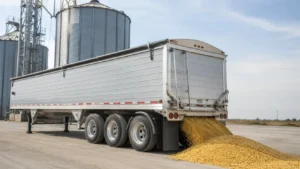

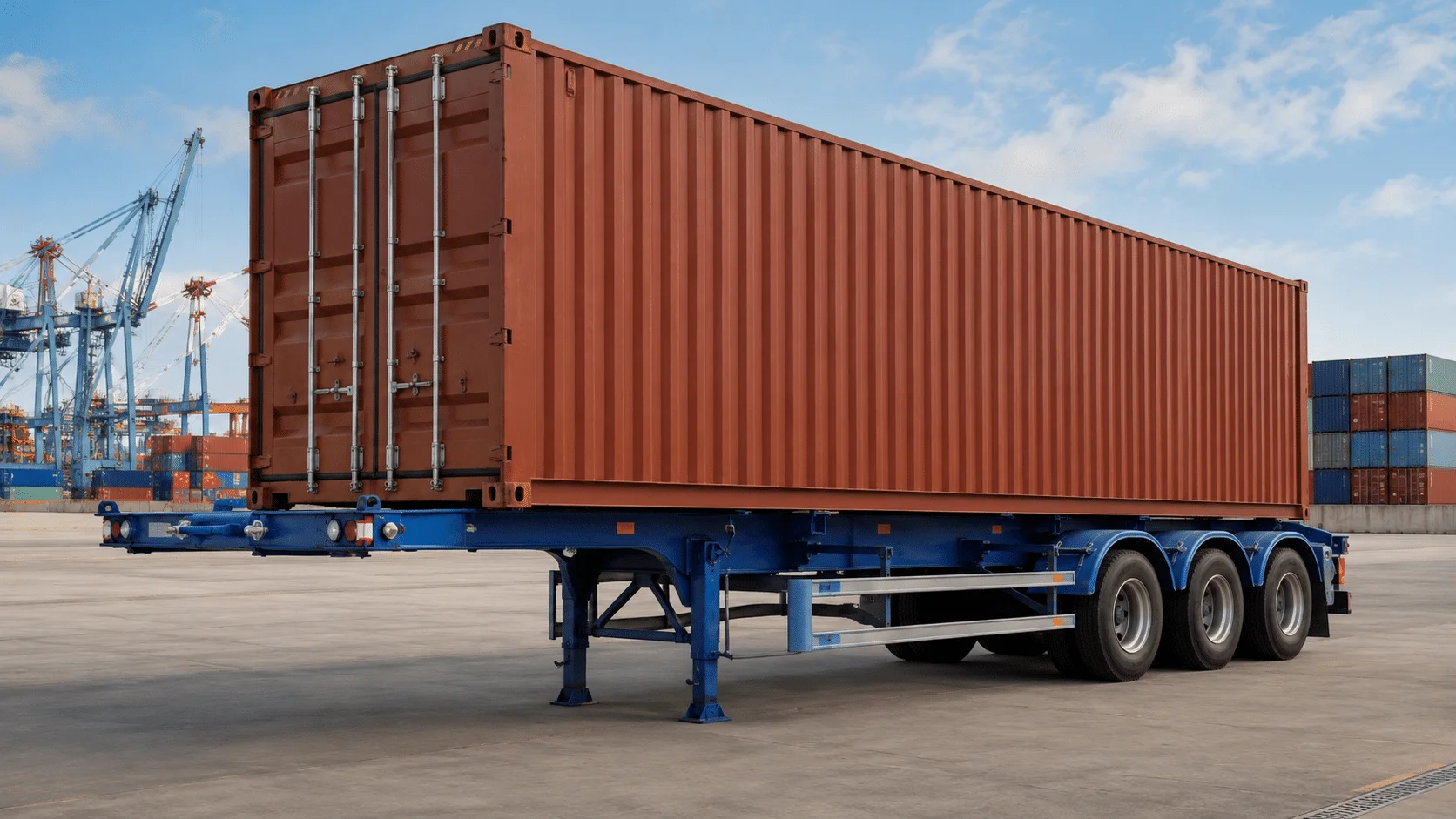
Efficient grain transportation connects farms, storage facilities, processing plants, ports and wholesale markets.
A grain trailer must provide sufficient loading volume, stable road performance and an efficient unloading method.
The appropriate design depends on whether the grain is transported in bags or as loose bulk material.
Bagged Grain Transport
Bagged grain can be carried by:
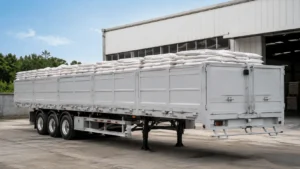
- Side wall semi trailers
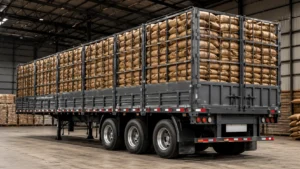
- Fence semi trailers
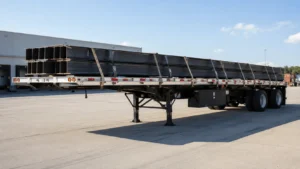
- Flatbed trailers with side protection
- Enclosed cargo trailers
Side wall and fence trailers are commonly selected because their opening panels make loading and unloading easier.
Bagged cargo must be stacked evenly and secured to prevent movement.
Bulk Grain Transport
Loose grain requires a body capable of containing small particles.
Common bulk grain trailer designs include:
- High-side grain trailer
- Grain tipper trailer
- Side tipper trailer
- Hopper trailer
- Walking-floor trailer
- Enclosed bulk trailer
The final body structure should prevent leakage and support efficient unloading.
Grain Tipper Trailer
A grain tipper trailer raises the front of the body so that cargo discharges through the rear.
Its main components include:
- Tipping body
- Hydraulic cylinder
- Rear gate
- Main chassis
- Stabilizing system
- Axles and suspension
- Hydraulic power connection
It is suitable for facilities with sufficient overhead and rear unloading space.
Side Tipper Trailer
A side tipper discharges cargo through one side of the body.
This may be useful where:
- Rear unloading space is limited
- Cargo needs to be spread along a receiving area
- The unloading point is beside the road
- Multiple side discharge locations are required
Stability is an important consideration during side tipping.
The ground should be firm, level and capable of supporting the trailer.
Hopper Trailer
A hopper trailer uses bottom discharge outlets.
Grain flows through gates located beneath the body.
This design can provide:
- Controlled unloading
- Reduced tipping risk
- Convenient discharge into pits or conveyors
- Lower overhead clearance requirements
The hopper angle should support reliable grain flow.
Body Material
Common materials include:
Carbon Steel
Carbon steel provides strength and is widely used for agricultural trailers.
Aluminum Alloy
Aluminum reduces trailer weight and may improve payload efficiency.
Stainless Steel
Stainless steel may be used where corrosion resistance or special hygiene requirements apply.
The material should be selected according to cargo, climate, cleaning requirements and budget.
Volume and Payload
Grain has different densities depending on the product and moisture content.
Trailer design should consider both:
- Maximum legal payload
- Required cargo volume
A trailer may reach its volume limit before reaching its weight limit, or the reverse.
The customer should provide the typical grain type and loading weight.
Sealing Requirements
Loose grain can escape through very small gaps.
Important sealing areas include:
- Tailgate
- Side panels
- Bottom discharge gates
- Body joints
- Inspection doors
- Hydraulic openings
Rubber seals or overlapping steel structures may be used to reduce leakage.
Cover Systems
A cover protects grain from rain, dust and contamination.
Common systems include:
- Manual tarpaulin
- Roll-over tarpaulin
- Sliding cover
- Mechanical cover
- Enclosed steel roof
The cover should be easy to operate and secure during road transport.
Unloading Safety
Before unloading, the operator should confirm:
- Ground is level
- Trailer is correctly positioned
- Overhead space is clear
- Tailgate or discharge gate is unlocked
- People remain outside the danger area
- Tractor and trailer are aligned
- Hydraulic system is operating normally
Tipping should stop immediately if the trailer becomes unstable.
Conclusion
Grain trailers are available in several structures, including side wall, fence, rear tipper, side tipper and hopper designs.
The best option depends on whether the cargo is bagged or loose, the unloading equipment, available space and local transport rules.