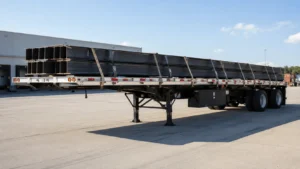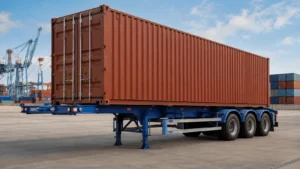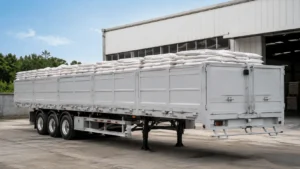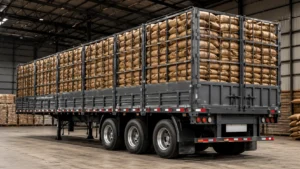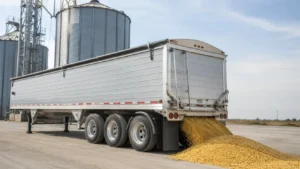

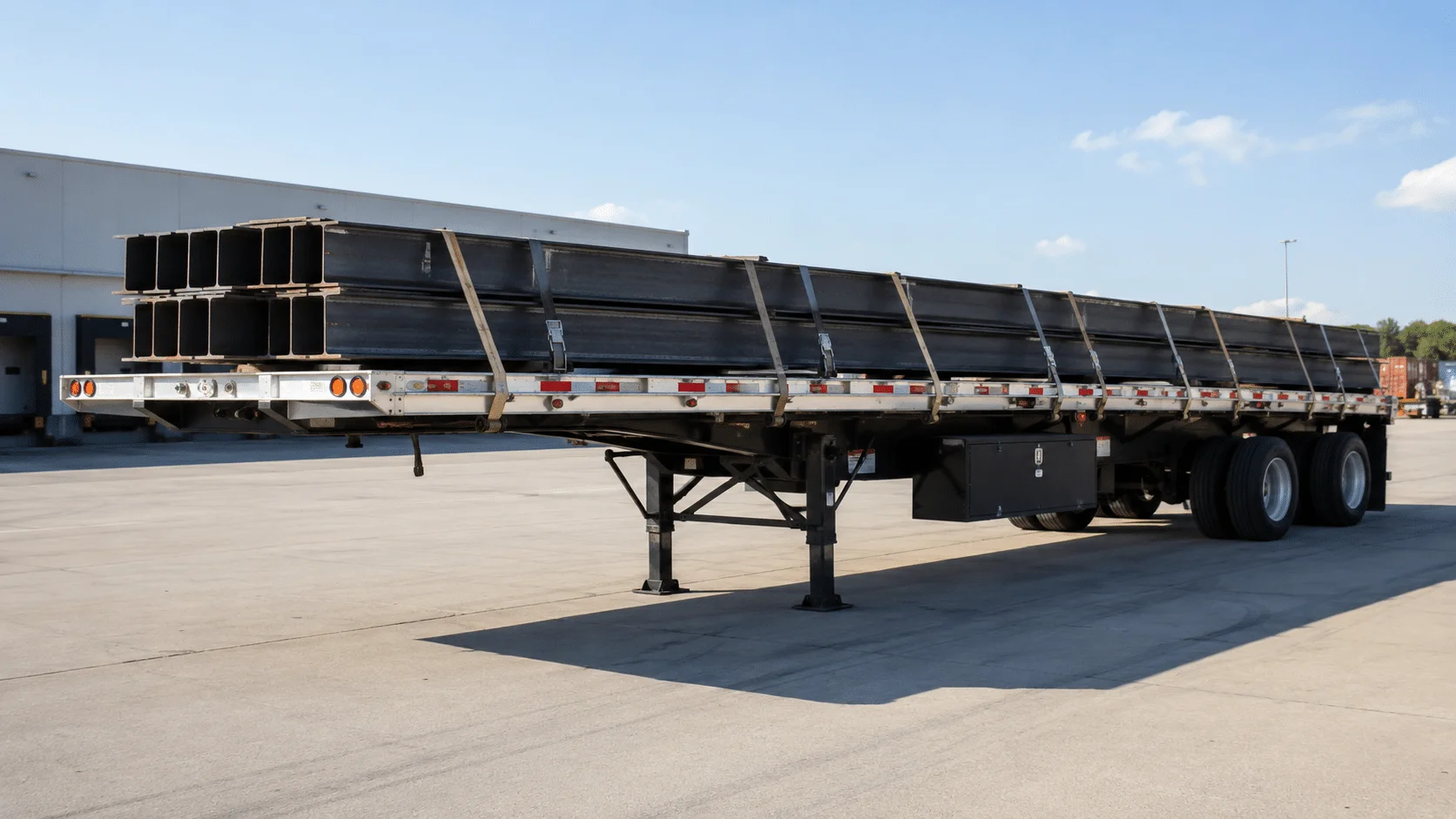
A side wall semi trailer is developed from the basic flatbed trailer structure.
It includes solid side panels around the loading platform to help contain cargo and prevent goods from sliding during transport.
The side panels are usually divided into multiple sections. Depending on the design, they may be opened, folded or removed to support different loading methods.
Main Structure
A typical side wall semi trailer includes:
- Main chassis
- Steel loading platform
- Front wall
- Rear wall
- Side panels
- Hinges and locking devices
- Axles and suspension
- Brake system
- Landing gear
- Cargo-securing points
The side wall height and panel design can be customized according to cargo type.
Agricultural Cargo Transport
Side wall semi trailers are commonly used in agricultural logistics.
Typical cargo includes:
- Bagged grain
- Rice
- Wheat
- Corn
- Fertilizer
- Seeds
- Animal feed
- Packaged agricultural products
The solid panels help prevent bags and packages from falling off the platform.
When the trailer reaches a warehouse or farm, individual side sections can be opened for unloading.
Packaged Goods
Side wall trailers are also suitable for transporting:
- Cartons
- Pallets
- Consumer products
- Industrial parts
- Building supplies
- Packaged chemicals where legally permitted
- General commercial cargo
Cargo should still be secured with straps, ropes or other approved restraint systems.
The side walls provide secondary protection but should not replace proper load securing.
Construction Materials
Common construction cargo includes:
- Cement bags
- Bricks
- Timber
- Pipes
- Steel sections
- Scaffolding
- Precast components
A reinforced platform may be required when cargo is heavy or loaded by forklift.
The trailer manufacturer should be informed about concentrated loading points and forklift axle loads.
Side Wall Height
The side wall height affects cargo capacity and loading convenience.
Lower side walls may be suitable for:
- Steel
- Pallets
- Construction materials
- Dense cargo
Higher side walls may be suitable for:
- Bagged agricultural products
- Lightweight packaged goods
- High-volume cargo
Excessively high side walls may increase trailer weight and wind resistance.
Panel Design
Common panel configurations include:
Fixed Side Panels
Fixed panels provide a simple and strong structure but reduce side-loading flexibility.
Hinged Side Panels
Hinged panels can be opened for loading and unloading.
Removable Side Panels
Removable panels allow the trailer to operate more like a flatbed when carrying oversized cargo.
Multi-Section Side Panels
Dividing the side wall into multiple sections allows only part of the trailer to be opened at one time.
This can improve control during unloading.
Floor Structure
The trailer floor should match the loading method.
Possible options include:
- Flat steel plate
- Anti-slip steel plate
- Wood deck
- Reinforced forklift loading areas
- Drainage holes where required
For frequent forklift loading, cross-member spacing and floor thickness should be carefully selected.
Cargo-Securing Accessories
Useful accessories include:
- Internal lashing rings
- Rope hooks
- Side posts
- Tarpaulin hooks
- Tool boxes
- Chain holders
- Removable partitions
A tarpaulin can be used to provide additional weather protection.
Advantages
A side wall semi trailer offers:
- Better cargo containment than a flatbed
- Flexible side loading
- Suitability for different cargo types
- Removable or openable panels
- Convenient warehouse operation
- Practical maintenance
- Customizable side wall height
Limitations
It may not be ideal for:
- Liquid cargo
- Fine powder cargo without sealed packaging
- Very high-volume lightweight cargo
- Weather-sensitive cargo without a cover
- Extremely heavy machinery requiring a low deck
Conclusion
A side wall semi trailer is a versatile choice for agricultural products, packaged goods, construction materials and regional logistics.
The side wall height, floor structure, panel design and securing system should be matched to the cargo and loading process.